
“You shall not commit adultery” (Exodus 20:14).
In G.K. Chesterton’s biography of St. Thomas Aquinas, Chesterton argues that the Middle Ages were necessary for healing the earth. The world had become so corrupt under the failing Roman empire–had been so sexualized by pagan idolatry–that it needed a thousand years of Christianity to wash away the filth.
Sounds a bit familiar, doesn’t it?
Jesus tells us in His Sermon on the Mount that adultery isn’t just about committing a physical act. It starts in the heart: “You have heard that it was said, ‘You shall not commit adultery.’ But I say to you that everyone who looks at a woman with lustful intent has already committed adultery with her in his heart” (Matthew 5:27-28).
Similar to the 6th commandment, the 7th commandment begins as an internal sin. Where murder begins with internal anger, adultery begins with internal lust. Actually, all of the human-focused commandments (5-10) follow this pattern. But in His teaching on lust, Jesus’ language is shockingly violent.
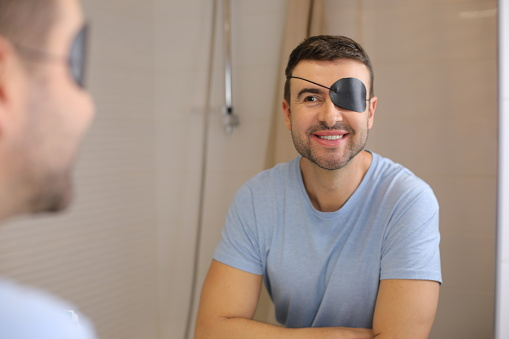
“If your right eye causes you to sin, tear it out and throw it away. For it is better that you lose one of your members than that your whole body be thrown into hell” (Matthew 5:29).
Jesus isn’t exaggerating. He’s helping us see the stakes.
Lust desensitizes us to the humanity in others. We reduce them to objects and cannot love them. And if we can’t love others, we can’t fulfill the two greatest commandments: to love God and love our neighbors.
Like the ancient Romans Chesterton mentions, we live in a hypersexual world. And like the ancient Romans, the temptation to idolatry–and lust–are everywhere. There’s way too much to say on this for one little post here. But I do want to start by pinpointing one place in which we might need to rip our eye out.
Of course we want to protect ourselves and our children from obvious sexual danger like adultery.
But no one wakes up on a random Tuesday and decides to have an affair. These things happen over time with continual exposure to suggestion and opportunity.
There is no generator on earth of suggestion and opportunity like our screens. We must be vigilant about our own and our children’s screen time.
But the very best way to be vigilant is to use them less.
Andy Crouch (author of The Tech-Wise Family) describes his practice of beginning his day with no screens: “I just spend a moment being who I really am, which is a very small part of a very large world, rather than what I am on the screen, which is a very large part of a very small world.”
My screen tells me, implicitly or explicitly, that I am the center of the universe. It’s not called the wePhone. We will become idolatrous, worshiping ourselves, if we do not carefully and intentionally counter our screens’ push towards self-worship. Jesus models obedience to the positive command implicit in the 7th commandment for us when He says, to His own friend, “Get behind me, Satan.” The positive command is to flee temptation and guard the purity of our minds.
At a deeper level, though, it’s simpler than that. It’s to remember who we are and to worship the God who made us. If we worship Him only, He will “lead us not into temptation, but deliver us from evil.”
More next week.
— Anderson Underwood